BMI Calculator
Calculate your Body Mass Index and health category
Formula Explanation
The Body Mass Index (BMI), originally formulated by Belgian polymath Adolphe Quetelet in 1832 (initially called the Quetelet Index) and subsequently popularized by physiologist Ancel Keys in 1972, serves as the standard anthropometric screening benchmark recognized by the World Health Organization (WHO) and the Centers for Disease Control and Prevention (CDC).
BMI calculates the statistical relationship between total body mass and squared stature, offering a rapid, non-invasive screening indicator for population-level weight status.
Official BMI Formulas
Metric System Formula (International Standard):
BMI = Weight (kg) ÷ [Height (m)]²
Imperial System Formula (Pounds and Inches):
BMI = [Weight (lbs) × 703] ÷ [Height (inches)]²
Comprehensive World Health Organization (WHO) BMI Classifications
The WHO categorizes BMI into standardized clinical tiers to identify prospective health risks associated with chronic cardiovascular, metabolic, and musculoskeletal conditions:
| BMI Range (kg/m²) | Clinical Classification | Associated Health Risk Level |
|---|---|---|
| Below 16.0 | Severe Thinness (Grade III Underweight) | High risk of nutrient deficiency, osteoporosis & anemia |
| 16.0 to 16.9 | Moderate Thinness (Grade II Underweight) | Increased susceptibility to fatigue and immune compromise |
| 17.0 to 18.4 | Mild Thinness (Grade I Underweight) | Sub-optimal baseline body weight |
| 18.5 to 24.9 | Normal Weight (Optimal Range) | Lowest statistical mortality and baseline chronic disease risk |
| 25.0 to 29.9 | Overweight (Pre-obesity) | Elevated risk of hypertension, insulin resistance, and lipids |
| 30.0 to 34.9 | Obesity Class I (Moderate) | High risk of Type 2 diabetes and coronary heart disease |
| 35.0 to 39.9 | Obesity Class II (Severe) | Very high risk of obstructive sleep apnea and joint erosion |
| 40.0 and above | Obesity Class III (Morbid / Extreme) | Extremely high / Critical cardiometabolic risk |
Scientific Limitations and Critical Blind Spots
While invaluable for epidemiologists tracking population health shifts, clinical practitioners recognize significant limitations when using BMI as an individual diagnostic marker:
- The Athletic / Muscle Mass Anomaly: BMI treats all body mass identically. Muscular athletes, bodybuilders, and rugby players frequently register in the "Overweight" or "Obese" ranges despite possessing sub-12% body fat and robust cardiovascular profiles.
- Normal-Weight Obesity ("Skinny Fat"): Individuals with low physical activity or sarcopenia (muscle loss) may test within the "normal" range (e.g., 22.0 kg/m²) while harboring dangerous concentrations of visceral adipose tissue wrapped around internal organs.
- Ethnic Specificity: Epidemiological studies demonstrate that individuals of South Asian and East Asian ancestry face heightened risks of cardiovascular disease and diabetes at lower BMI thresholds. Consequently, the WHO recommends an Asian overweight threshold of 23.0 kg/m² and obesity threshold of 27.5 kg/m².
Complementary Clinical Diagnostic Metrics
For an accurate clinical perspective on overall health and visceral fat, health professionals recommend combining BMI with:
- Waist-to-Height Ratio (WHtR): A simple, powerful rule of thumb: maintain your waist circumference to less than half your height.
- Dual-Energy X-ray Absorptiometry (DEXA) or Bioelectrical Impedance: Measures genuine lean muscle mass versus adipose tissue distribution.
Step-by-Step Guide
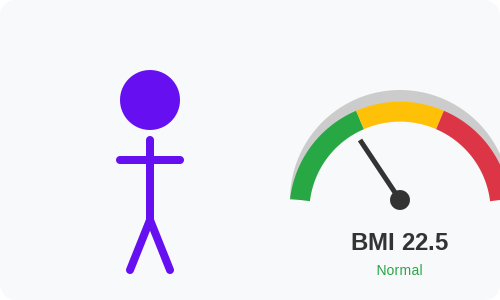
Step-by-Step Calculation: Adult Metric & Imperial Analysis
Subject Profile:
- Body Weight: 78.5 kg (approx. 173 lbs)
- Height: 178 cm (approx. 5 feet 10 inches = 70 inches)
Step 1: Convert Height into Meters
Standard SI computation requires meters. Divide centimeters by 100:
178 cm ÷ 100 = 1.78 m
Step 2: Calculate Height Squared
1.78 × 1.78 = 3.1684 m²
Step 3: Divide Weight by Height Squared
BMI = 78.5 ÷ 3.1684 = 24.78 kg/m²
Step 4: Clinical Interpretation and Target Weight Range
A score of 24.78 kg/m² positions this individual on the upper cusp of the Normal Weight Range (18.5 – 24.9).
To remain within this optimal medical baseline at 1.78 meters, the recommended target weight range spans between 58.6 kg ($18.5 \times 3.1684$) and 78.9 kg ($24.9 \times 3.1684$).